
Most businesses looking for a warehouse in Tirupati start their search the wrong way. They begin by asking about rent per square foot, compare a few options, and choose the cheapest one. But months later they realise the space doesn’t support their operations. Trucks struggle to enter the yard, the floor cracks under forklift loads, or there are no proper loading docks.
A warehouse decision should never be based only on price. It should be based on infrastructure, long-term efficiency, and operational practicality.
This guide explains the key factors businesses should evaluate before renting or building a warehouse in Tirupati.
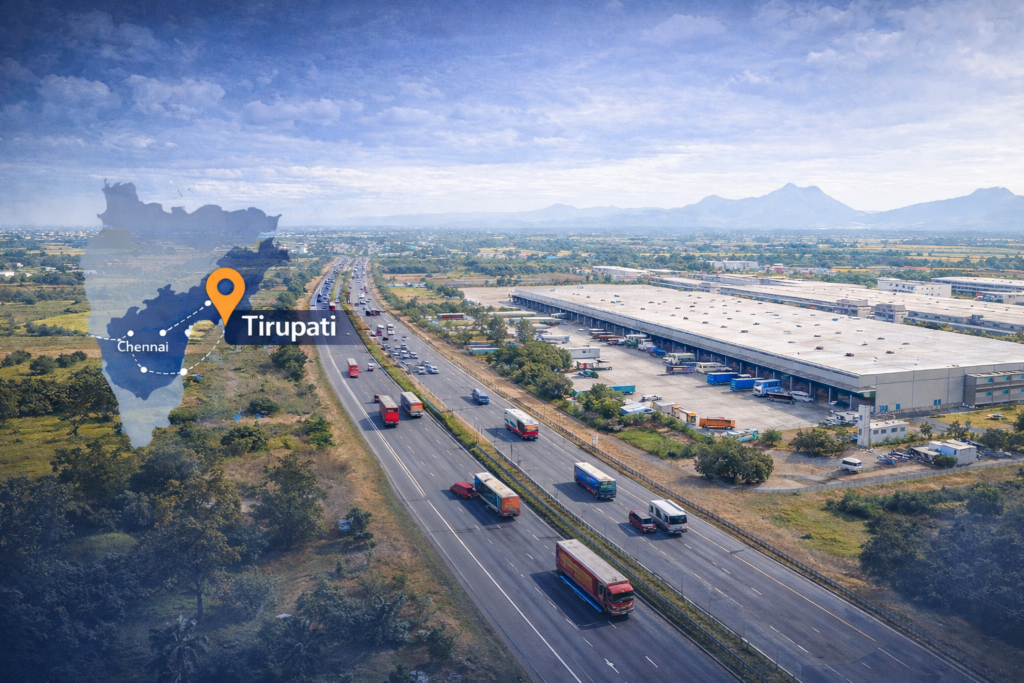
Why Tirupati Is Becoming a Serious Logistics Location
A few years ago, Tirupati was not considered a major logistics hub in South India. Cities like Chennai, Bangalore, and Hyderabad dominated the logistics landscape.
However, the situation has changed rapidly.
Tirupati now has strong connectivity through NH-40, which connects the city to Chennai in roughly three hours. The growth of APIIC industrial zones, the presence of Tirupati International Airport, and relatively lower land costs have made the city attractive for logistics and warehouse operations.
For companies distributing goods across Andhra Pradesh, Tamil Nadu, and Telangana, Tirupati has become a strategically located logistics point.
1. Clear Height — The Specification Most Businesses Ignore
Clear height refers to the usable vertical space inside a warehouse. It is measured from the finished floor to the lowest point of the roof structure.
This specification directly affects how efficiently you can store goods.
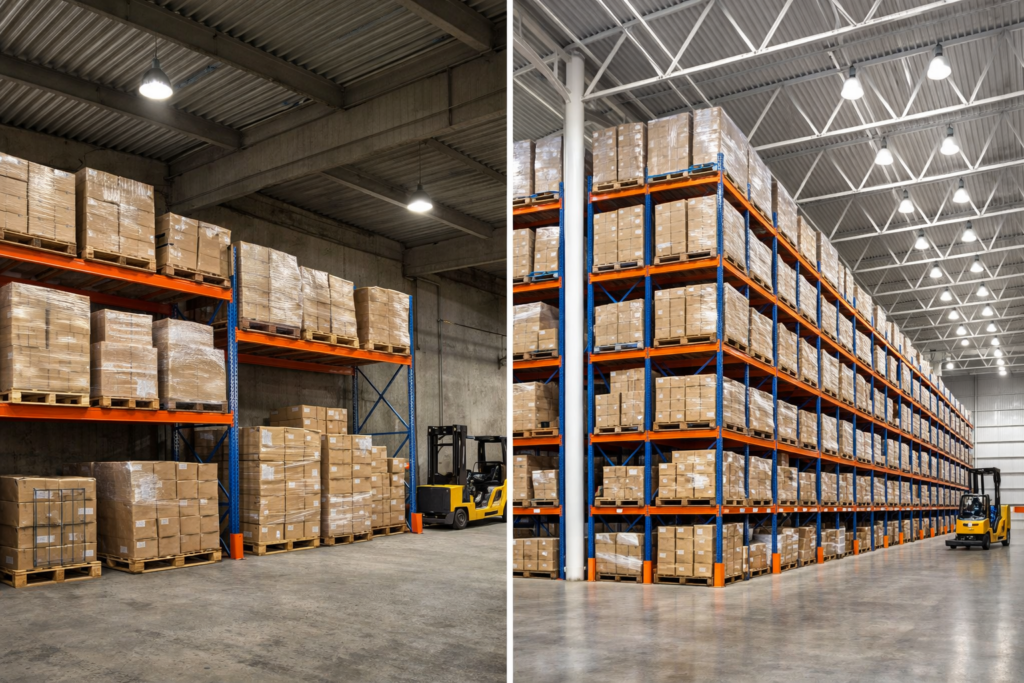
Older industrial sheds often have a clear height of 6 to 7 metres, which limits the use of modern pallet racking systems. With such height restrictions, businesses lose a significant portion of their potential storage capacity.
Modern warehouses typically provide 10 to 12 metres of clear height, allowing multiple levels of racking and better utilisation of the same floor space.
When inspecting a warehouse, always ask for the clear height specification in writing.
2. Floor Height and Dock Levellers
The height of the warehouse floor above road level plays an important role in loading and unloading efficiency.
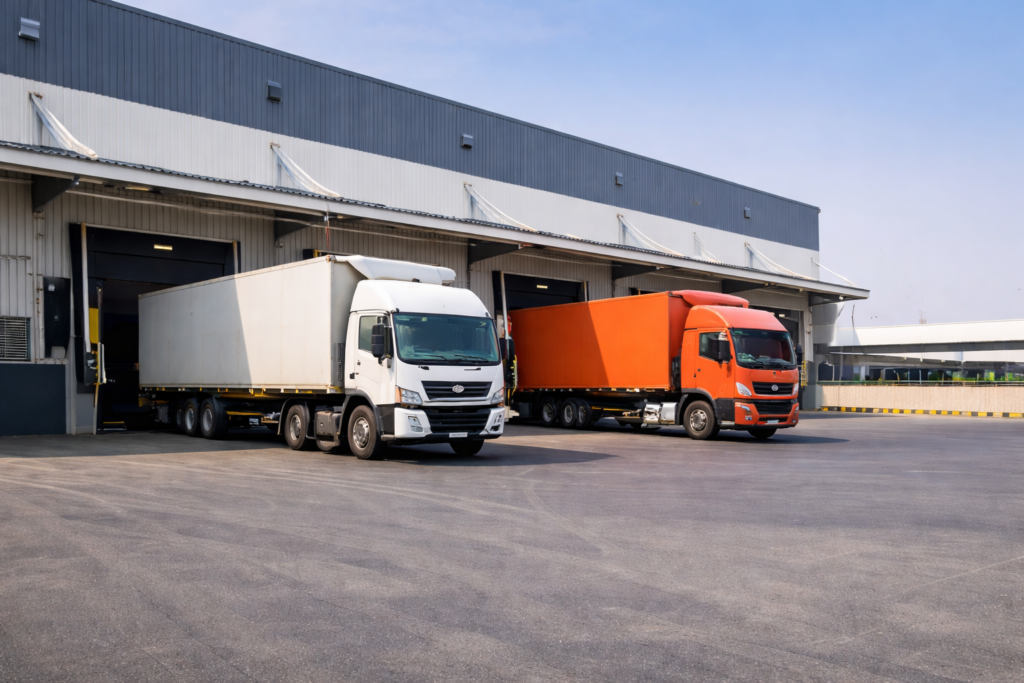
A floor that sits 4 to 5.5 feet above road level aligns well with standard truck bed heights. This allows goods to move directly between the warehouse and the truck without complex ramps or additional equipment.
Dock levellers further improve this process. These adjustable plates bridge the gap between the truck and the warehouse floor, ensuring smooth loading regardless of truck height differences.
Businesses should also check the number and positioning of loading bays, as this affects how efficiently trucks can move in and out of the facility.
3. Floor Strength and Industrial Flooring
Warehouse flooring must be designed to handle heavy loads.
For most logistics operations, the floor should support 3 to 5 tonnes per square metre. If the warehouse is used for heavy materials such as machinery parts or steel products, the load capacity must be higher.
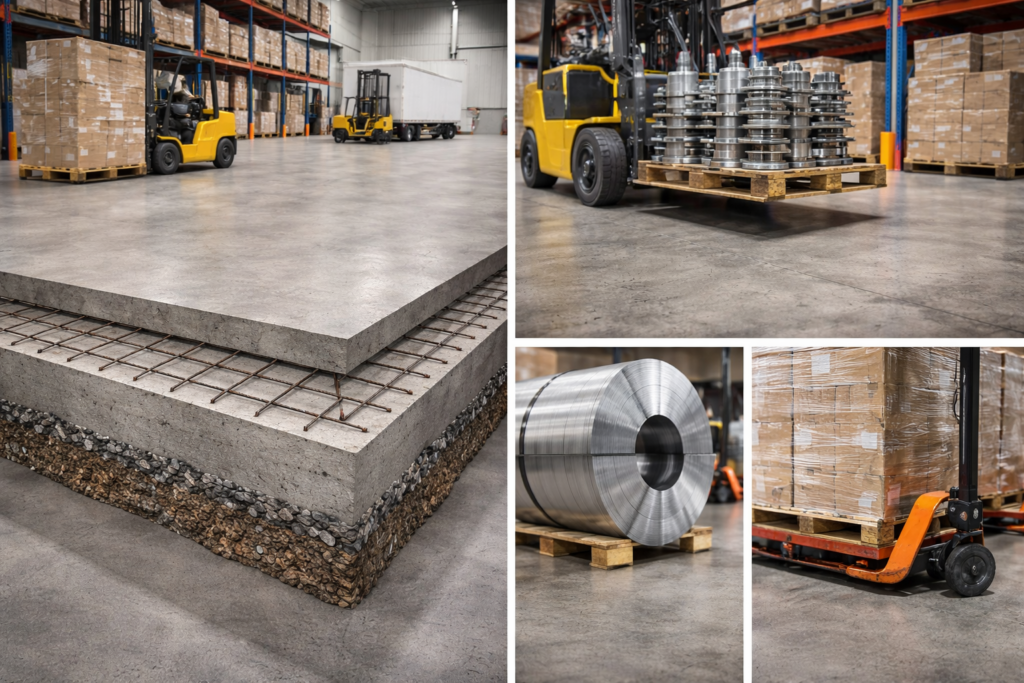
Poor flooring leads to cracks, operational disruptions, and maintenance disputes with property owners.
Another important factor is floor flatness. Even small variations can create issues for forklifts and automated systems.
Before finalising a warehouse, ask for the floor thickness, concrete grade, and load rating.
4. Number and Placement of Loading Bays
The number of loading bays should match the warehouse’s operational requirements.
A facility handling 20 trucks per day requires significantly more loading infrastructure than a warehouse handling only occasional deliveries.
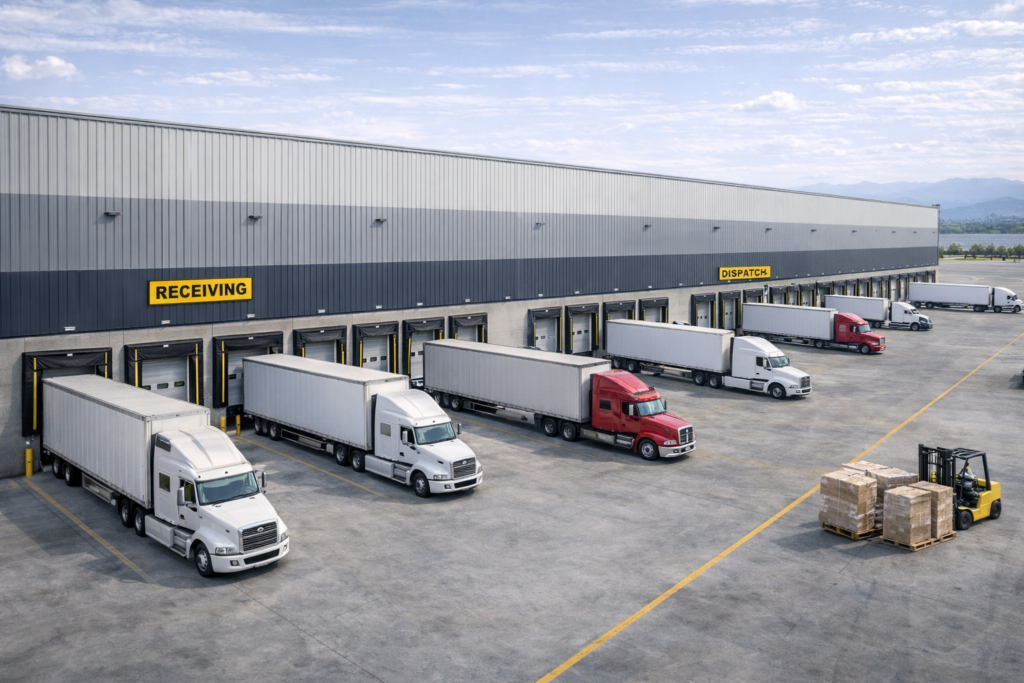
In a well-designed warehouse:
- Receiving and dispatch bays are separated
- Trucks have enough turning radius
- The yard allows simultaneous movement of multiple vehicles
For example, a 1,10,000 sq ft warehouse handling active logistics operations may require 8 to 10 loading bays.
For more about ware house in tirupati