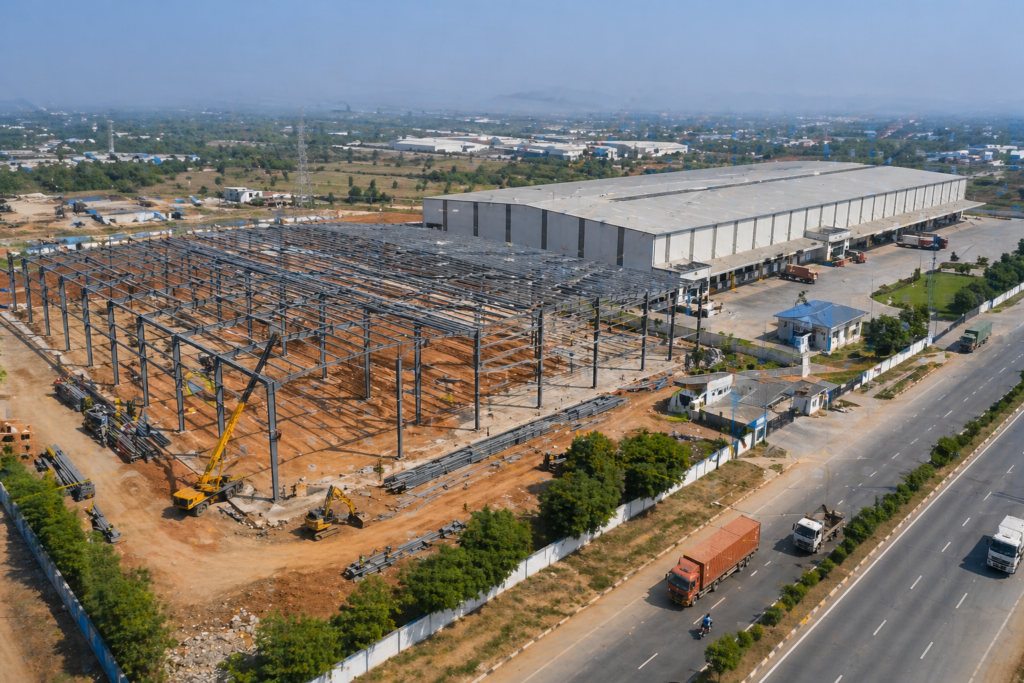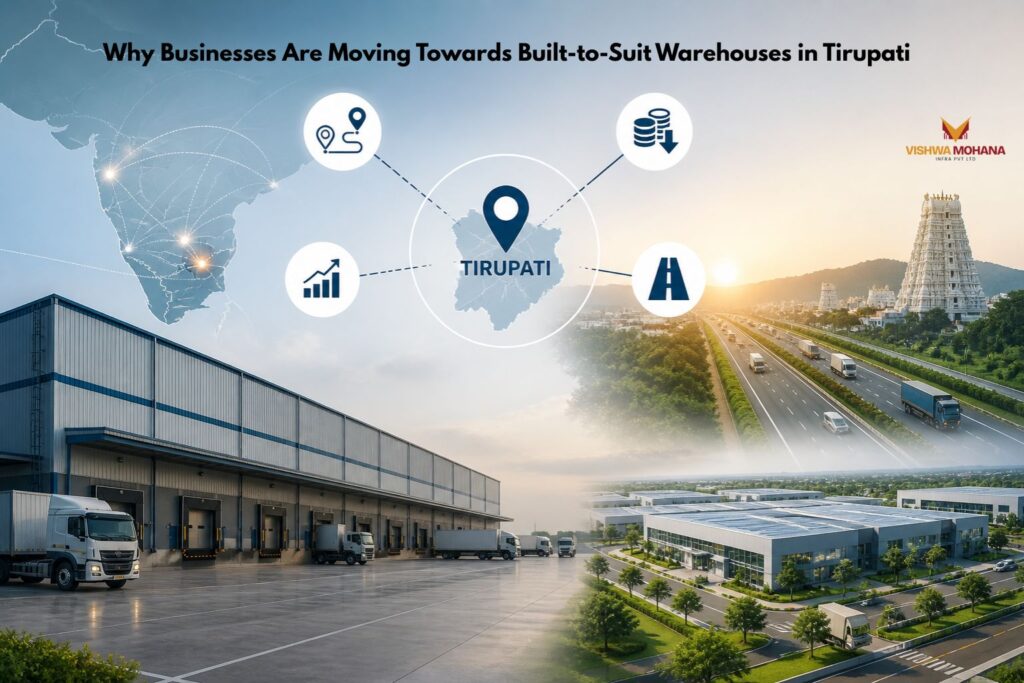

A factory can be built almost anywhere.
But a successful manufacturing ecosystem cannot.
That is why global manufacturers spend months evaluating locations before making investment decisions. They are not just looking for available land. They are looking for infrastructure, connectivity, logistics support and long-term growth potential.
In today’s competitive business environment, the location of a manufacturing facility can directly impact transportation costs, delivery timelines, supply chain efficiency and future expansion opportunities.
This is one of the main reasons why connected growth corridors continue to attract attention from manufacturers around the world.
These corridors combine transportation infrastructure, industrial development, logistics networks and business accessibility into one ecosystem.
As industrial activity continues to expand across South India, Warehouse Land in Tirupati is increasingly becoming part of that conversation.
As industrial activity expands, Warehouse Land in Tirupati is attracting attention from manufacturers and logistics operators.
Infrastructure Creates Opportunity
Many people assume companies choose locations based primarily on land cost.
In reality, infrastructure often carries far greater importance.
A location may offer inexpensive land, but if it lacks proper connectivity, businesses eventually pay the price through higher transportation costs, longer delivery times and operational inefficiencies.
Global manufacturers think differently.
They ask questions such as:
- How quickly can products reach customers?
- How easily can raw materials be transported?
- How close are suppliers and logistics partners?
- Can the location support future expansion?
The answers to these questions often determine whether a location becomes an industrial hub or remains underdeveloped.
Infrastructure creates opportunity because it reduces friction.
The easier it becomes to move people, products and services, the more attractive a location becomes for business investment.
Manufacturing Growth Follows Connectivity
Across the world, there is a common pattern.
Major highways are developed.
Transportation infrastructure improves.
Industrial investments begin to arrive.
Logistics facilities follow.
Commercial activity expands.
Employment opportunities increase.
Over time, entire industrial ecosystems emerge.
This sequence has repeated itself in many successful growth corridors.
Connectivity acts as the foundation.
Once businesses gain confidence in transportation networks and infrastructure, investment naturally follows.
This is why connected locations consistently outperform isolated industrial areas.
For manufacturers, connectivity is not simply a convenience.
It is a competitive advantage.
The Shift Beyond Metro Cities
For many years, industries concentrated around major metropolitan cities.
These locations offered access to markets, workforce, transportation and business networks.
However, as cities expanded, several challenges emerged:
- Rising land prices
- Traffic congestion
- Limited expansion opportunities
- Higher operating costs
As a result, many manufacturers began looking beyond traditional industrial centers.
They started exploring emerging locations that offered similar connectivity but greater room for growth.
This shift has created opportunities for regions that combine infrastructure development with industrial potential.
Businesses are increasingly looking for locations that support long-term scalability rather than short-term convenience.
Why Warehouse Land in Tirupati Is Appearing on More Industrial Expansion Maps
Tirupati has traditionally been recognized for its cultural and religious significance.
Today, however, it is attracting attention for a different reason.
Its growing industrial ecosystem.
Several factors are contributing to this transformation.
Strong highway connectivity, airport accessibility, expanding industrial activity and improving infrastructure are creating conditions that support long-term business growth.
For manufacturers evaluating South Indian expansion opportunities, Tirupati is becoming increasingly difficult to ignore.
The region offers a combination of accessibility and future growth potential that many businesses seek.
This is one of the reasons Warehouse Land in Tirupati is generating growing interest among industrial investors and logistics operators.
The Importance of Logistics in Modern Manufacturing
Manufacturing no longer ends when a product leaves the production line.
The real challenge begins when products need to move efficiently through the supply chain.
A strong logistics network helps businesses:
- Reduce transportation costs
- Improve delivery performance
- Manage inventory efficiently
- Support customer expectations
- Increase operational flexibility
This is why logistics infrastructure has become a critical part of industrial planning.
Manufacturers now evaluate warehousing, transportation networks and distribution capabilities alongside production requirements.
Locations that provide integrated logistics advantages often attract stronger long-term investment.
Warehouse Land lease in tirupati Is Becoming a Strategic Asset
Warehouses were once viewed as simple storage facilities.
That perception has changed dramatically.
Today, warehouses play an important role in inventory management, distribution planning, order fulfillment and supply chain efficiency.
For growing businesses, warehousing is no longer an operational necessity alone.
It has become a strategic business asset.
The right warehouse location can improve delivery speed, reduce costs and support future growth.
This is why businesses increasingly search for:
- Warehouse Land in Tirupati
- Warehouse for Lease in Tirupati
- Logistics Land in Tirupati
- Industrial Land in Tirupati
- Build-to-Suit Warehouse in Tirupati
Their objective is not simply to secure space.
They are looking for infrastructure that supports long-term operational performance.
The Rise of Build-to-Suit Infrastructure
Every business operates differently.
A logistics company has different requirements from a manufacturing company.
An FMCG distributor has different operational needs than an e-commerce fulfillment center.
Traditional warehouse models often force businesses to adapt their operations around available infrastructure.
Build-to-Suit development changes this approach.
Instead of adapting operations to a building, the building is designed around operational requirements.
This provides advantages such as:
- Better workflow efficiency
- Improved space utilization
- Faster movement
- Scalability for future growth
- Lower operational challenges
As supply chains become more sophisticated, demand for customized infrastructure continues to increase.
How Vishwamohana Infra warehouse land lease in tirupati Supports Future Industrial Growth
As industrial activity expands around Tirupati, businesses increasingly require infrastructure designed for modern operations.
Vishwamohana Infra is focused on developing logistics and industrial infrastructure that aligns with these requirements.
The project combines location advantages with operational functionality.
Key highlights include:
- 5 Acres of Planned Development
- 1,10,000+ Sq.Ft Across Multiple Phases
- Build-to-Suit Warehouse Development
- 12 Meter Clear Height
- 10 Loading and Unloading Bays
- Dock Levelers
- Industrial Grade Infrastructure
- Airport Adjacent Location
- NH-71 Connectivity
- Future Expansion Capability
These features support manufacturers, logistics operators, distributors and industrial businesses seeking scalable infrastructure in a growing industrial corridor.
For businesses evaluating Warehouse Land in Tirupati, infrastructure quality is becoming just as important as location itself.
Looking Beyond Today
Successful manufacturers rarely make decisions based only on current conditions.
They focus on what a location may become over the next five, ten, or even twenty years.
This long-term perspective explains why connected growth corridors continue attracting investment.
Infrastructure projects create momentum.
Industrial development strengthens ecosystems.
Logistics networks improve efficiency.
Business activity generates further demand.
Over time, these factors work together to transform emerging regions into major industrial destinations.
The companies that recognize these trends early are often the ones that benefit most.
Conclusion
The demand for Warehouse Land in Tirupati is expected to grow as connectivity and industrial activity continue to expand.
Global manufacturers prefer connected growth corridors because connectivity influences every aspect of business performance.
Better roads improve transportation.
Better transportation strengthens logistics.
Better logistics support stronger supply chains.
And stronger supply chains create sustainable growth.
As industrial development continues across South India, Warehouse Land in Tirupati is becoming increasingly relevant to businesses seeking strategic infrastructure advantages.
With growing industrial activity, airport connectivity, highway access and logistics-focused developments such as Vishwamohana Infra, Tirupati is steadily positioning itself as a location that supports the future of manufacturing, warehousing and supply chain operations.
FAQs
How do connected growth corridors attract industrial investment?
Connected growth corridors provide transportation infrastructure, logistics support and accessibility that help businesses operate more efficiently.
Why is warehouse infrastructure important for manufacturers?
Warehouse infrastructure supports inventory management, distribution efficiency, faster dispatch operations and supply chain performance.
What factors should businesses evaluate before selecting industrial land?
Connectivity, infrastructure quality, logistics support, expansion potential, workforce availability and long-term growth opportunities should all be considered.
How does airport connectivity benefit industrial businesses?
Airport connectivity improves accessibility, supports business travel, enhances logistics flexibility and strengthens regional competitiveness.
Why are businesses exploring industrial opportunities in Tirupati?
Tirupati offers strategic connectivity, industrial ecosystem growth, logistics advantages and future expansion opportunities that support long-term business development.
Think warehouse demand in Tirupati is growing? The bigger story is what’s happening around the industrial corridor. Read next → Why the Tirupati Industrial Corridor Is Creating New Warehouse Investment Opportunities. https://vishwamohanainfra.com/tirupati-industrial-corridor-warehouse/